
Meet the Team: Paolo Parrucci
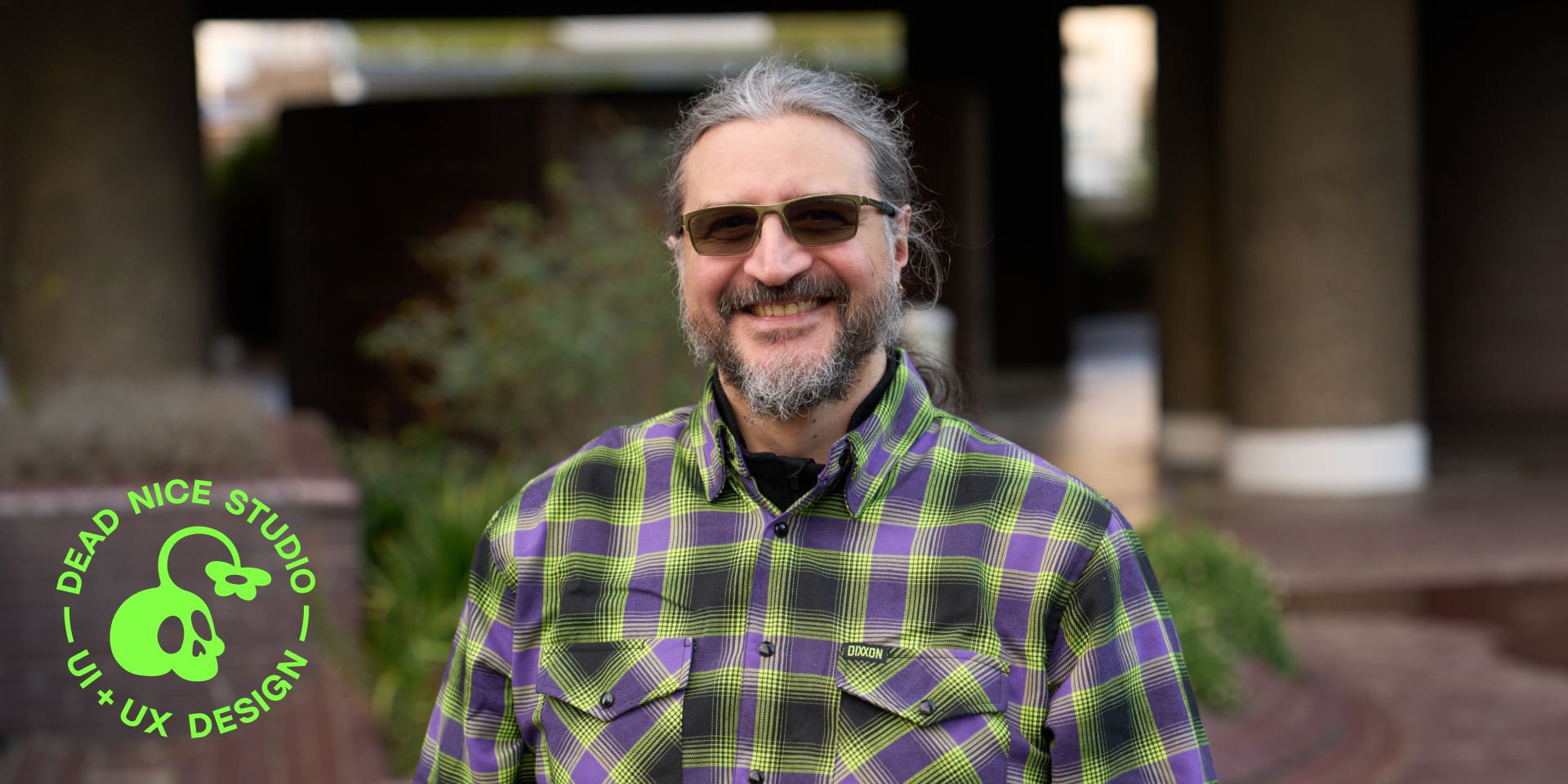
Meet Paolo Parrucci, Dead Nice’s latest recruit landing in January 2026. A bona-fide UI+UX wizard with a decade-plus trail of game credits that reads like a mini hall of fame.
Paolo’s done it all from lead UI artist to studio creative director, crafting slick experiences on everything from Mortal Kombat 1 and The Division 2 to classics like Team Sonic Racing and Halo Wars 2. He even led UI on Fable Legends, that mythical Lionhead project that never saw release but lives on in design lore.
What links all those chapters isn’t a single discipline but a mindset. Paolo thrives at the intersection of design, visuals and engineering, bringing a holistic view of production that comes from having truly “been there” on all sides of the process. Whether it’s shaping UI that feels hand-crafted and deeply thematic, optimising pipelines or building teams that trust each other and do their best work, his north star is always the same: making games better.
As Dead Nice continues to grow its end-to-end UI + UX offering, Paolo joins us to strengthen our technical foundations while pushing creative thinking further, helping us support studios of all sizes with smart, flexible, production-proven UI teams.
We sat down with Paolo to talk about wearing many hats, cancelled dream projects, creative hills worth dying on and why Dead Nice felt like his people. Spoiler: Hollow Knight fans may want to sit down for this one.
You’ve worn a bunch of hats in games (art, technical, studio leader to name a few). What’s the common thread for you and how do those different brains talk to each other on a project?
Having to wear different hats throughout my career seemed a bit random at the time, but it proved to be incredibly useful, as it allowed me to have a more complete picture of the needs and pain points of both the stakeholders the and team involved in a project, as “I’ve been there”. At the end of the day, though, it all comes down to problem solving and the dopamine hit that comes with that. And whether is pushing control points in a vector graphic, optimising texture memory or assembling the perfect team for a new project, the underlying driving force is always to try to make the best game possible.
What’s a project in your career that made you go ‘yep, this is why I love games’ and what did you personally bring to it that you’re proud of?
That has to be Fable Legends, sadly cancelled before it had a chance to reach the wider gaming public. Although a fairly big departure from the traditional Fable RPGs, the sheer creativity of the team and how it all came together to create a beautiful experience was quite special. For the UI, I decided to go with pre-rendered 3D for all the visuals, almost if they were made by hand by artisans in the world of Albion. The idea in my head was that the gameplay was actually a theatrical production and the UI was props that the troupe put up during the play.
When you’re leading a team, what are the non-negotiables you want people to feel from you day-to-day?
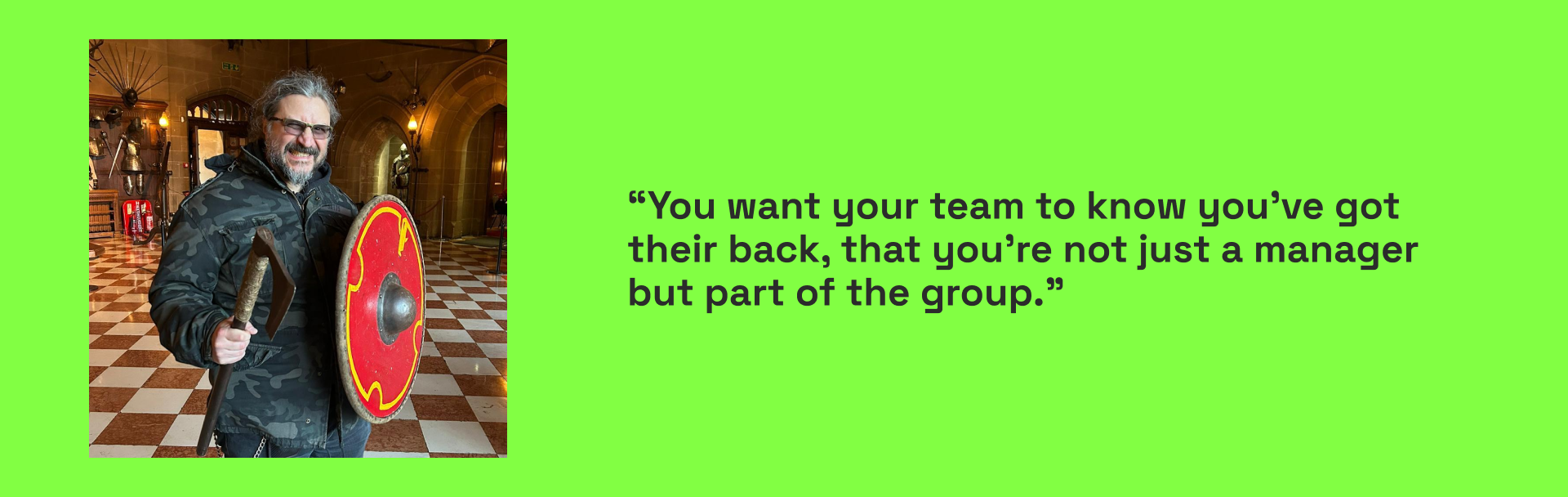
Trust and reliability, no doubt. When leading projects you want your team to know that you’ve got their back, that you’re not just a manager, but part of the group too, that you’ll take their needs seriously and will try to address problems swiftly. Similarly, when doing project work, you need the client to trust you to deliver what they need in time and with the quality required.
What’s a technical or creative challenge you love getting thrown at you, the kind that makes your eyes light up?
Ah! I still have impostor syndrome, so my first reaction to new challenges is sheer panic, lol. Jokes aside, I love projects that allow you to approach problems with out-of-the-box solutions, trying to move beyond the standard approaches and really focus on novel ideas that will make the experience better. Sadly, chances to do that don’t happen very often though!
What’s a creative hill you will die on, no matter how many sensible people beg you to stop?
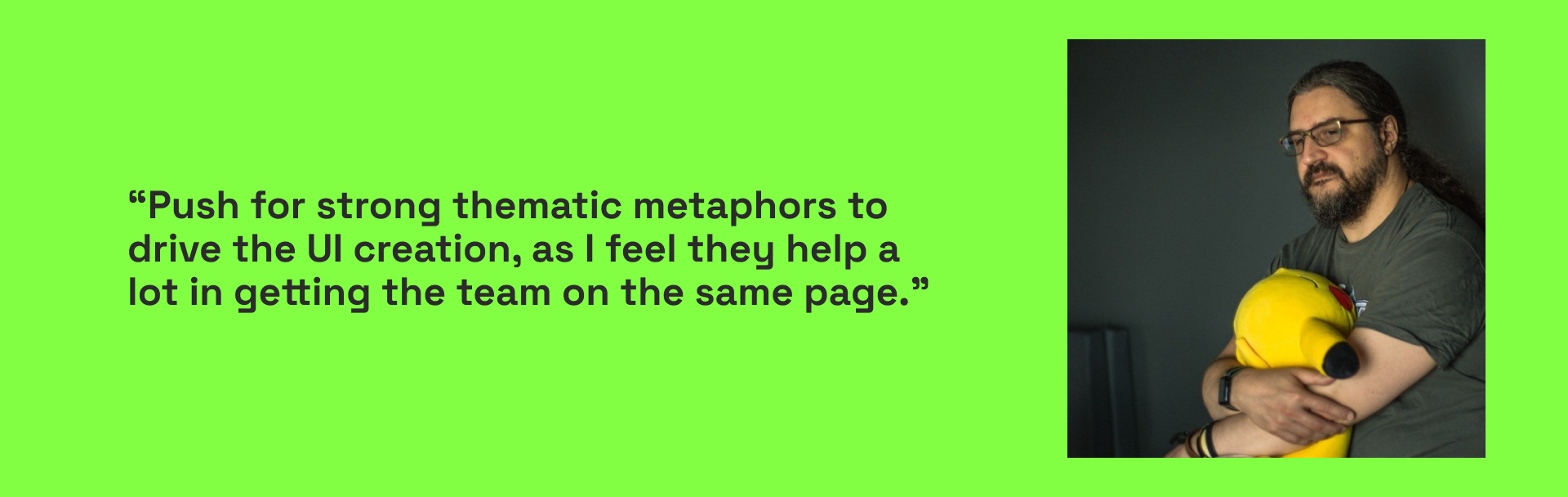
I always try to push for strong thematic metaphors to drive the UI creation, as I feel they help a lot in getting the team on the same page when it comes to create content that will fit with the vision. Something like the aforementioned “UI is made by artisans with physical materials” for Fable Legends, or “UI is an AR projection on the player’s helmet” for instance: while not constraining the visual style, they give a good starting point for the thinking process when developing new UI features and help avoiding blank page syndrome.
What’s the best piece of feedback you’ve ever received, the one that actually changed how you work?
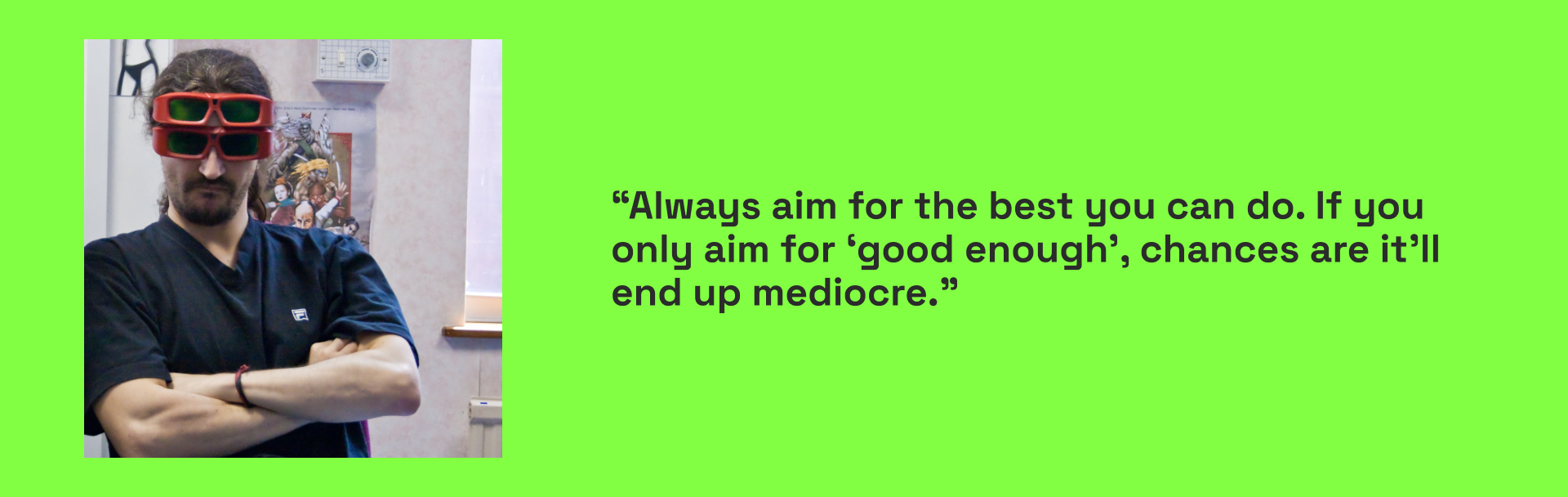
It was actually at the very beginning of my career, when I was working as a boardgame designer. My publisher told me “Always aim for the best you can do. Projects tend to fall short of their goals, so if you just try to do something good enough, chances are it’ll end up mediocre.” That has been my guiding light ever since.
From a partner/technical director POV, where do you see the biggest opportunity for Dead Nice to grow over the next year and what’s one smart move you’re excited to help us make?
Strengthening the technical side of the studio will allow Dead Nice to provide fully integrated end-to-end support for UI/UX production, from initial design to visual development and finally to technical implementation, engineering and bug fixing, while also be able to fully assess pipelines and workflows to find efficiencies and help our clients get more bang with their buck. That will also allow us to help smaller studios by providing them a full production-proven UI team that they can freely ramp up or down according to their needs, without having to hire for very specialised skillsets on their permanent teams.
You’ve done a ton across art, tech, and studio leadership so what was it about Dead Nice that made you go ‘yeah, those are my people,’ and what do you feel like we can build here that you couldn’t anywhere else?
I was genuinely impressed by the sheer creativity and skill of the team, but, perhaps more importantly, by the culture of the studio, it really is dead nice! Moreover, I feel the game industry is going through a seismic change that will fundamentally shift the way we make games. Whatever shape the industry will take at the end of this period, being fully independent will allow Dead Nice to be nimble and agile in responding to those changes and be ready for what’ll be the new normal.
What kind of partner do you want to be at Dead Nice and what should people come to you for when they want to make something ridiculously good?
What I can bring to the table is my experience. I’ve shipped a lot of games in my career, both in studios and as an outsource partner, so I am well aware of the pain points of both sides and I’ve faced and solved a lot of the challenges that our clients are facing right now. And going back to the “multiple hats” discussion, having design, visual and technical expertise allows me to be a bridge between disciplines, as I understand their “language” and their needs.
Be honest: what’s your most controversial game take that would get you booed in a room of devs?
Right, so Hollow Knight should be the perfect game for me: I love metroidvanias, I adore its visual style, music, setting and atmosphere, but I just couldn’t get into it, which is a real shame as I got completely left out of the Silksong hype!
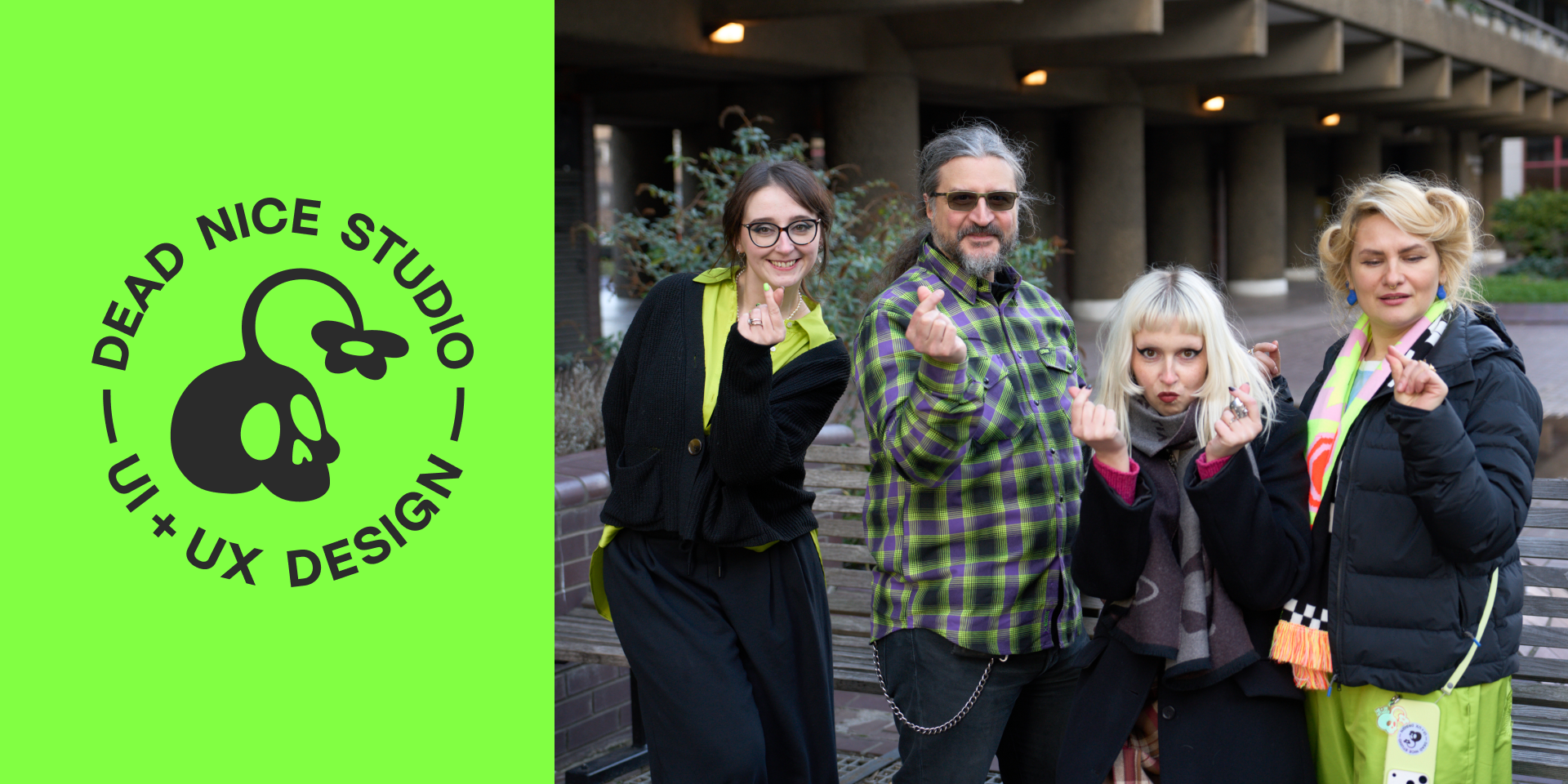
The Dead Nice team from left to right, Jasmine, Paolo, Sam and Agnes.
